

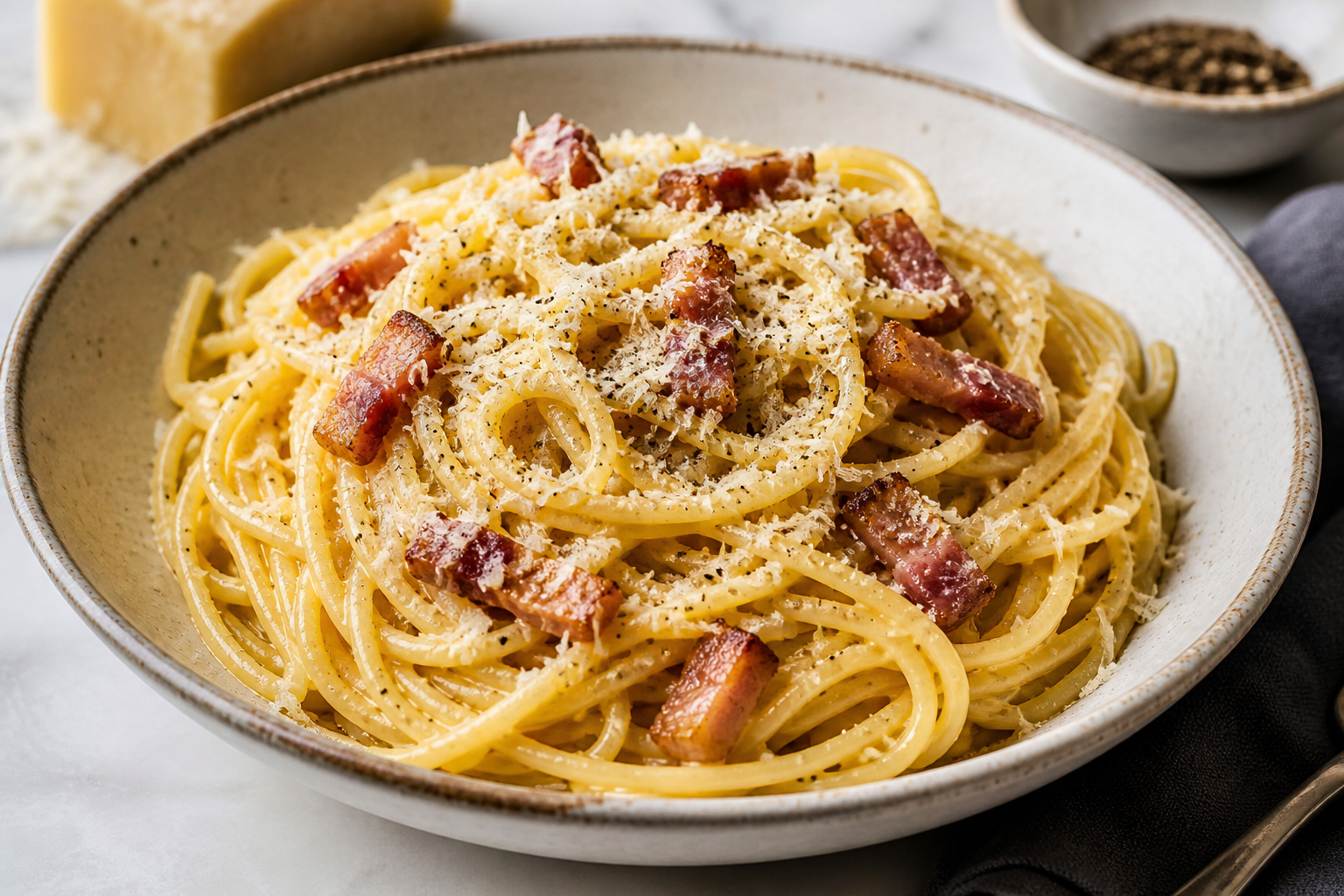
A silky, savory Italian pasta made with eggs, cheese, guanciale, and black pepper.
Spaghetti Carbonara is the kind of dish that feels luxurious even though it uses only a few humble ingredients. The first forkful brings glossy pasta, salty cured pork, sharp Pecorino Romano, and a warm pepper bite that makes the sauce taste deep and lively.
This Roman classic proves that simple food can feel unforgettable when technique leads the way. Instead of heavy cream, traditional Spaghetti Carbonara relies on eggs, cheese, pasta water, and heat control to create a creamy sauce. Moreover, the recipe rewards patience: stir gently, move fast, and let the pasta do most of the work.
Why You’ll Love This Spaghetti Carbonara Recipe
This recipe turns everyday pasta into a dinner that feels special, yet it stays practical for a weeknight. You need one pot, one skillet, one bowl, and less than 30 minutes from start to finish. The method also teaches a useful kitchen skill: using pasta water to create a smooth sauce without adding cream.
The flavor is bold but clean. Guanciale brings deep savory richness, Pecorino Romano gives a salty bite, and black pepper keeps everything bright. Because the sauce clings to the noodles instead of pooling in the bowl, every forkful tastes balanced.
You will also love how flexible the timing feels once the prep is done. While the water boils, you can grate the cheese and whisk the eggs. While the pasta cooks, the guanciale crisps. Finally, the tossing step takes only a minute, which makes Spaghetti Carbonara ideal when you want impressive food without a complicated process.
Quick Spaghetti Carbonara Recipe Details
- Prep time: 10 minutes
- Cook time: 15 minutes
- Total time: 25 minutes
- Servings: 4
- Skill level: Intermediate but approachable
- Main tools: Large pot, skillet, mixing bowl, tongs, cheese grater
For best results, use a wide skillet and a bowl large enough for tossing. Crowded cookware makes it harder to coat the pasta evenly. A microplane or fine grater also helps because powdery cheese melts faster than thick shreds.
The recipe works best when served immediately, so set the table before you combine the sauce. Place warm bowls nearby, open the wine or sparkling water, and keep extra cheese ready. This small setup step protects the creamy texture and makes the meal feel relaxed instead of rushed.
What is Spaghetti Carbonara?
Spaghetti Carbonara is a traditional Roman pasta dish made with spaghetti, guanciale, eggs, Pecorino Romano cheese, and black pepper. It belongs to the beloved family of Roman pastas, along with cacio e pepe, amatriciana, and gricia. Each dish uses a small pantry, yet each one tastes bold because the ingredients carry real character.
The exact history of Spaghetti Carbonara has many stories. Some cooks connect it to charcoal workers, while others point to postwar Rome, when eggs and cured pork became easier to find. However, most food lovers agree on the heart of the dish: hot pasta meets a rich egg and cheese mixture, then the cook tosses everything until the sauce turns glossy.
Authentic Spaghetti Carbonara does not need cream, butter, garlic, or onions. Those additions can taste good, but they change the identity of the dish. The classic version focuses on balance. Guanciale adds salty fat, eggs add body, Pecorino adds sharpness, pepper adds heat, and pasta water ties everything together.
For more background about the origin of the dish, you can read this external reference about Carbonara.
Ingredients for Spaghetti Carbonara
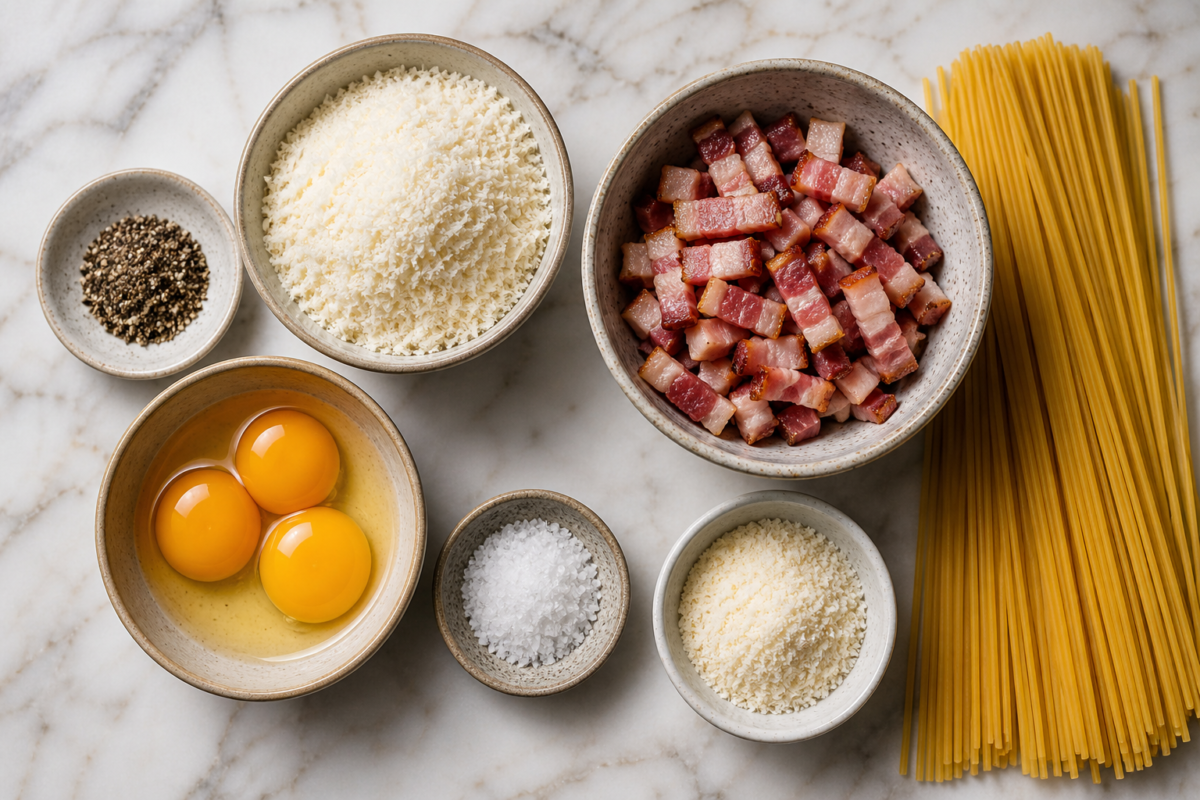
Choose high-quality ingredients because this recipe has nowhere to hide. Fresh eggs, real Pecorino Romano, and proper guanciale make Spaghetti Carbonara taste like a restaurant dish instead of a quick bowl of pasta.
- 12 ounces spaghetti, bronze-cut if possible
- 4 ounces guanciale, cut into small strips or cubes
- 3 large egg yolks
- 1 large whole egg
- 1 cup finely grated Pecorino Romano cheese, plus more for serving
- 1 teaspoon freshly ground black pepper, plus more to taste
- 1 tablespoon salt for the pasta water
- 1 cup reserved starchy pasta water, added as needed
If guanciale is unavailable, use pancetta as the closest alternative. Bacon can work in a pinch, but it brings smoke, so the final flavor will move away from traditional Spaghetti Carbonara. For the cheese, avoid pre-grated tubs because they often contain anti-caking agents that stop the sauce from melting smoothly.
Step-by-Step Spaghetti Carbonara Instructions
- Prepare the ingredients before cooking. Bring the eggs to room temperature, grate the Pecorino Romano finely, cut the guanciale, and set a large mixing bowl near the stove. Spaghetti Carbonara moves quickly once the pasta finishes, so preparation prevents scrambling.
- Boil the pasta water. Fill a large pot with water and bring it to a strong boil. Add salt, but use less than you would for some pasta dishes because guanciale and Pecorino already bring plenty of salt.
- Cook the guanciale slowly. Add the guanciale to a cold skillet, then place it over medium-low heat. Let the fat render slowly for 8 to 10 minutes, stirring occasionally. The pieces should become crisp at the edges while the fat turns clear and fragrant.
- Mix the egg sauce. In a bowl, whisk the egg yolks, whole egg, grated Pecorino Romano, and black pepper until thick and smooth. The mixture should look like a paste. This paste becomes the creamy base for Spaghetti Carbonara.
- Cook the spaghetti. Add the spaghetti to the boiling water and cook until just al dente. Before draining, reserve at least 1 cup of pasta water. This starchy water helps loosen, emulsify, and shine the sauce.
- Combine pasta and guanciale. Transfer the hot spaghetti into the skillet with the guanciale and rendered fat. Toss well for 30 seconds so the noodles absorb the savory fat. Turn off the heat before adding the egg mixture.
- Create the creamy sauce. Move the pasta to the bowl with the egg and cheese mixture, or keep it in the warm skillet off the heat. Add a small splash of pasta water and toss constantly. The residual heat thickens the eggs without scrambling them.
- Adjust the texture. Add more pasta water, one tablespoon at a time, until the sauce coats every strand. Perfect Spaghetti Carbonara should look glossy, not dry, clumpy, or watery.
- Serve immediately. Twirl the pasta into warm bowls. Finish with extra Pecorino Romano, fresh black pepper, and crisp guanciale pieces from the pan.
Spaghetti Carbonara Cooking Tips for Best Results
Use room-temperature eggs because cold eggs can seize when they touch hot pasta. Also, grate the cheese very finely so it melts into the sauce instead of forming grainy clumps.
Control heat carefully. The biggest mistake with Spaghetti Carbonara is adding the egg mixture over direct heat. If the pan feels too hot, wait 30 seconds before tossing. However, do not let the pasta cool completely, because you still need enough heat to thicken the sauce.
Save more pasta water than you think you need. Starchy water works like a bridge between cheese, egg, and pork fat. Moreover, it lets you rescue a sauce that feels too thick. Add it slowly and toss with energy until the pasta turns shiny.
Use freshly cracked black pepper. Pre-ground pepper tastes flat, while fresh pepper gives Spaghetti Carbonara its signature warmth. Toasting pepper for a few seconds in the rendered fat can deepen the aroma, but keep the heat gentle.
Do not over-salt the water. Pecorino Romano and guanciale already carry salt, so heavily salted water can push the dish too far. Taste before adding any extra seasoning at the end.
A final chef’s note: taste the sauce before serving, not while the eggs are still thick in the bowl. The pasta water, pork fat, and cheese change the seasoning as they come together. If the finished noodles taste too salty, add a tiny splash of unsalted hot water and toss again. If they taste flat, add pepper and a dusting of cheese rather than plain salt.
Serving Suggestions
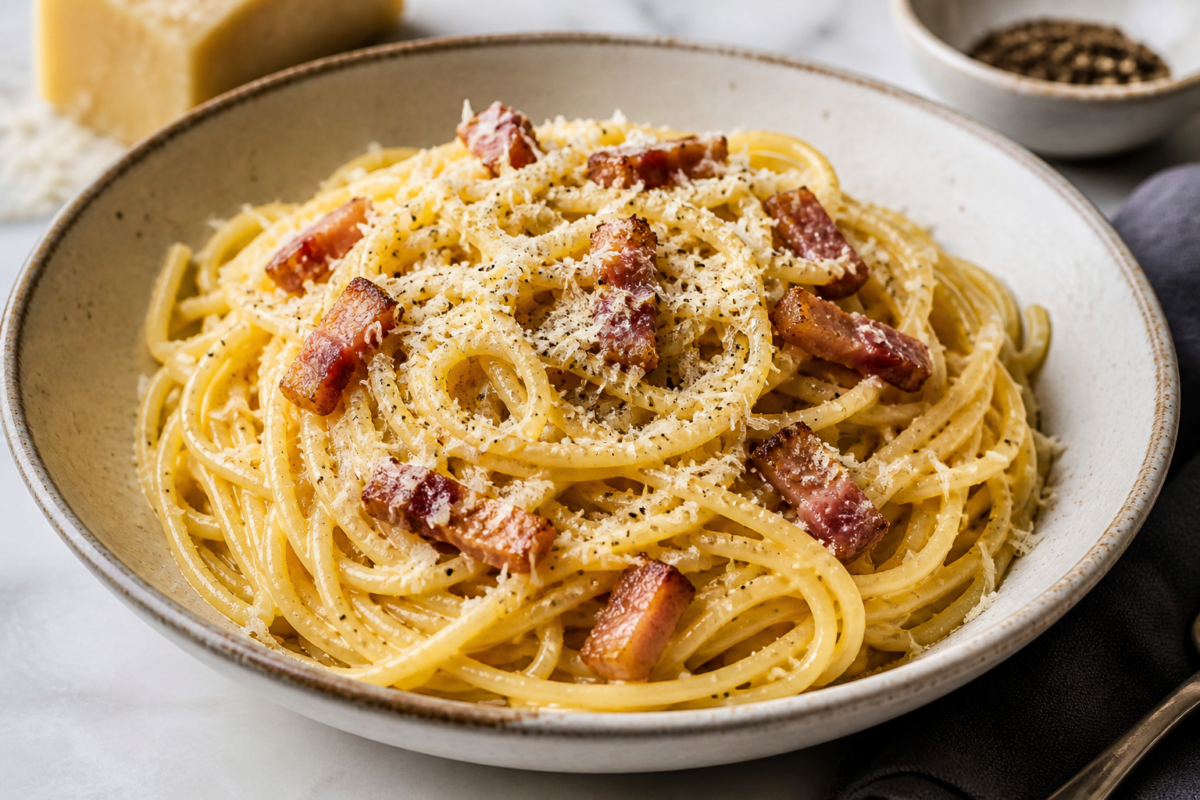
Serve Spaghetti Carbonara as soon as it leaves the pan. The sauce thickens as it sits, so warm bowls and ready diners make a real difference. For a beautiful presentation, use tongs and a ladle to twist the spaghetti into tall nests, then sprinkle the top with cheese and pepper.
A crisp green salad pairs well because it cuts through the richness. Try arugula with lemon juice and olive oil, romaine with a light vinaigrette, or shaved fennel with herbs. Garlic bread may taste tempting, but a simple crusty loaf works better because it does not compete with the pasta.
For another easy pasta dinner, try our Cacio e Pepe recipe, which uses Pecorino Romano and black pepper in a lighter, cheese-forward sauce.
For drinks, choose something refreshing. Sparkling water with lemon keeps the meal light. A dry Italian white wine, such as Frascati or Pinot Grigio, also works beautifully. If you prefer red wine, pick a lighter bottle with bright acidity.
Variations & Alternatives
Classic Spaghetti Carbonara has strict roots, but home cooks often need flexibility. These variations keep the spirit of the dish while helping different diets, budgets, and taste preferences.
Healthy version: Use a smaller amount of guanciale and increase the black pepper and cheese aroma. You can also serve a modest portion with a large salad. Whole wheat spaghetti adds fiber, although it creates a nuttier flavor and a slightly firmer bite.
Spicy version: Add a pinch of red pepper flakes to the guanciale fat before tossing in the pasta. This change is not traditional, but it gives Spaghetti Carbonara a lively kick without hiding the cheese and pepper.
Vegetarian option: Replace guanciale with sautéed mushrooms. Cook them until deeply browned, then add a small splash of olive oil for richness. The result will not be classic Spaghetti Carbonara, but it can still deliver a savory, creamy pasta experience.
Pancetta version: Pancetta makes a practical substitute because it shares a cured pork profile. Since it has less fat than guanciale, you may need a small drizzle of olive oil to help the sauce emulsify.
No-Pecorino option: Use Parmigiano Reggiano if Pecorino tastes too sharp or salty. Many cooks even use a half-and-half blend. The flavor becomes softer, but the sauce still turns creamy.
Nutrition Information
Nutrition will vary based on the pasta brand, cheese amount, and cut of guanciale. Still, a generous serving of Spaghetti Carbonara usually lands in the range below.
- Calories: about 620 per serving
- Protein: about 25 grams
- Carbohydrates: about 62 grams
- Fat: about 31 grams
- Saturated fat: about 12 grams
- Sodium: about 820 milligrams
- Fiber: about 3 grams
This recipe serves 4 people. To make the meal lighter, serve smaller portions with vegetables on the side. To make it more filling, add a salad, roasted broccoli, or a simple soup before the pasta.
Helpful Timing and Storage Notes
Spaghetti Carbonara tastes best right away, so plan to cook it just before serving. The active cooking time is short, but timing matters. Start the guanciale before the pasta finishes, mix the eggs while the water heats, and keep your pasta water close.
Leftovers can be stored in an airtight container in the refrigerator for up to 2 days. Reheat gently in a skillet over low heat with a splash of water. Stir constantly and stop as soon as the pasta warms through. The sauce may not return to its original silkiness, but gentle heat prevents the eggs from turning rubbery.
Freezing is not recommended. Egg-based sauces split after thawing, and the pasta loses its pleasing texture. If you want a make-ahead shortcut, grate the cheese, cut the guanciale, and mix the eggs a few hours early. Then cook the pasta fresh.
Conclusion
Spaghetti Carbonara proves that a memorable dinner does not need a long ingredient list. With hot pasta, crisp guanciale, eggs, Pecorino Romano, and black pepper, you can create a silky Roman classic that tastes rich, balanced, and deeply comforting.
Finally, remember that technique matters more than speed. Turn off the heat, toss with confidence, and use pasta water to build the sauce gradually. Try this Spaghetti Carbonara tonight, then share your results, leave a comment, or save the recipe for your next Italian dinner craving.
Frequently Asked Questions About Spaghetti Carbonara
Does Spaghetti Carbonara use cream?
No, traditional Spaghetti Carbonara does not use cream. The creamy texture comes from eggs, finely grated cheese, rendered guanciale fat, and starchy pasta water. Cream can make the dish heavier and can dull the sharp flavor of Pecorino Romano.
How do I stop Spaghetti Carbonara from scrambling?
Turn off the heat before adding the egg mixture. Toss the pasta quickly and add warm pasta water in small splashes. If the pan feels extremely hot, move everything to a mixing bowl before combining. This method gives you sauce instead of scrambled eggs.
Can I make Spaghetti Carbonara with bacon?
Yes, you can use bacon when guanciale is unavailable. However, bacon has a smoky flavor, so the dish will taste different from the Roman version. Choose thick-cut bacon and cook it gently so the fat renders without burning.
What cheese works best for Carbonara?
Pecorino Romano works best because it tastes salty, sharp, and traditional. Parmigiano Reggiano creates a milder sauce. For a balanced flavor, use mostly Pecorino with a little Parmigiano.
Can I make this recipe ahead of time?
You can prepare the ingredients ahead, but cook the pasta and sauce right before serving. Spaghetti Carbonara depends on heat, movement, and fresh starch. Once it sits, the sauce thickens and loses its glossy texture.
What pasta shape should I use?
Spaghetti is the classic choice because long strands hold the creamy sauce well. However, rigatoni, mezze maniche, bucatini, or linguine can also work. Choose a bronze-cut pasta if possible because its rough surface grips sauce better.