

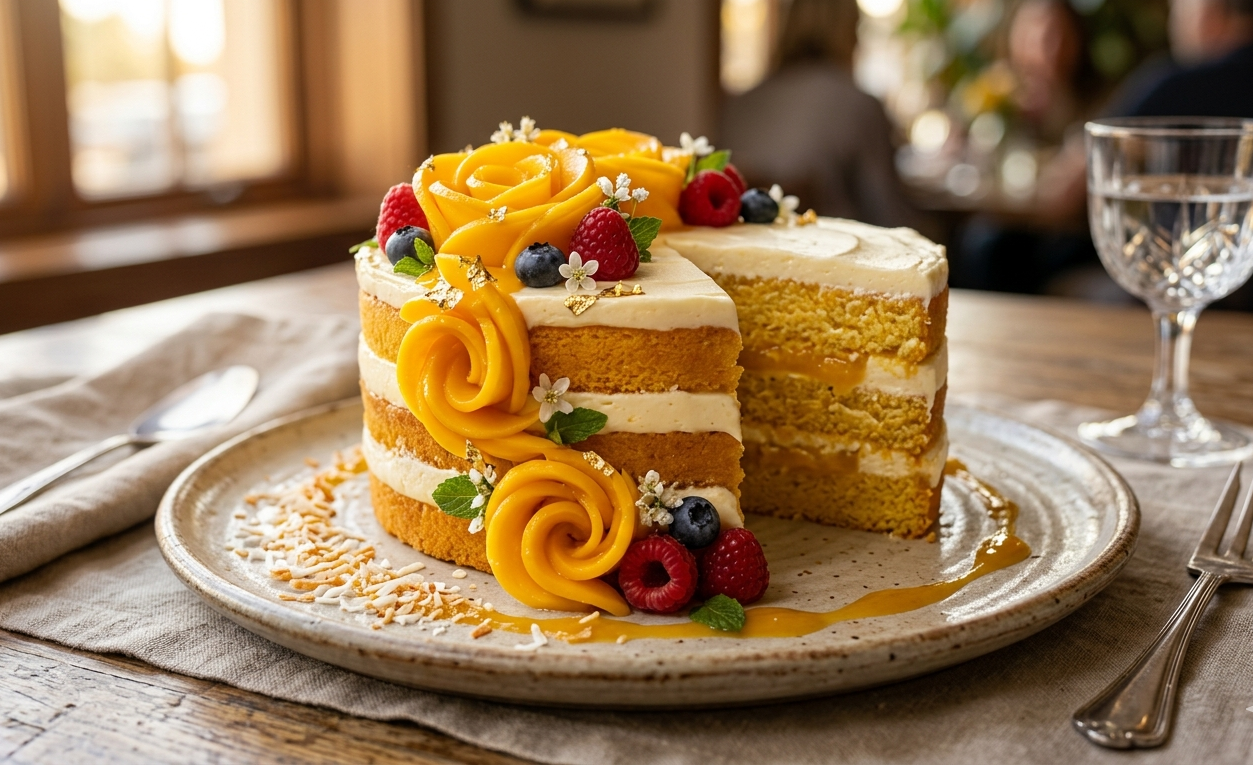
Mango Cake Recipe 7-Step Guide – Ultra-Moist Tropical Perfection
Introduction
The moment this mango cake enters the oven, the entire kitchen begins to shift in atmosphere. Heat activates the fruit sugars, and within minutes a rich, tropical aroma starts to rise—sweet, golden, and slightly honeyed. It doesn’t just smell like baking; it smells like ripe mangoes condensed into warmth and softness.
As the batter sets, something precise happens at a chemical level. The edges begin to caramelize gently, forming a thin golden crust that locks in moisture, while the center stays tender and airy. The contrast is intentional: a delicate outer structure protecting a soft, almost cloud-like crumb inside.
This is not an ordinary fruit cake.
This mango cake is designed as a controlled baking system, engineered for three critical outcomes: maximum moisture retention, elevated mango flavor concentration, and stable sponge structure. Most home versions fail because they rely on intuition rather than balance—resulting in cakes that are either too dense, overly wet, or lacking true mango intensity.
This version corrects those failures by carefully managing fat-to-liquid ratio, aeration timing, and fruit integration. The result is a cake that feels light on the fork but rich on the palate, where every bite carries consistent mango flavor from surface to core.
In short, this is where technique meets tropical indulgence—built not just to be baked, but to be remembered.
Historically, mango desserts trace back to South Asia, where mangoes are revered as the “king of fruits.” Over time, Western baking techniques merged with tropical ingredients, giving rise to the modern mango sponge cake. What you’re about to make is the culmination of both traditions—flavor-forward and technically sound.
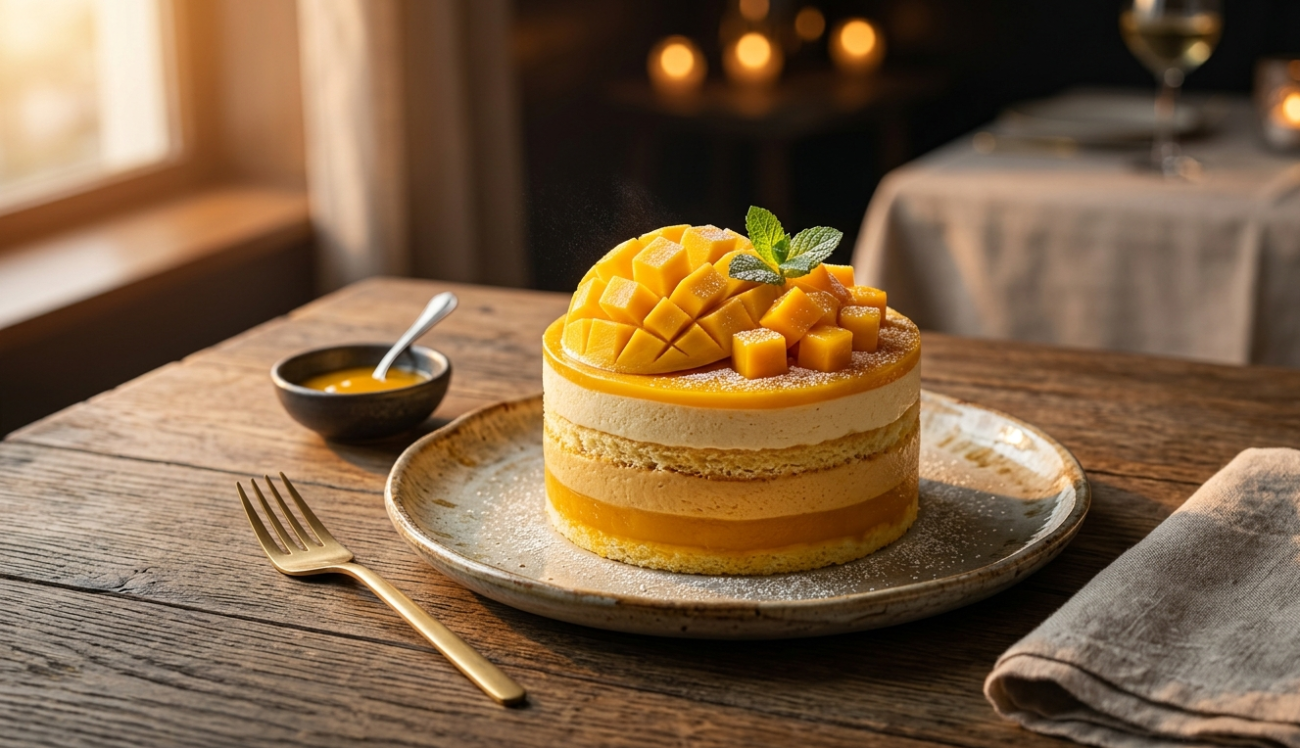
The Science of Mango Cake: Understanding the Chemistry
At its core, a great mango cake is a balance between moisture, structure, and aeration.
Mango puree introduces high water content and natural sugars. This affects gluten development and baking dynamics. Too much puree, and your cake collapses. Too little, and you lose flavor.
Here’s what’s happening under the hood:
- Gluten Formation: Flour proteins (gliadin and glutenin) hydrate and form gluten. Mango acidity slightly weakens gluten, creating a softer crumb.
- Sugar’s Role: Mango sugars enhance browning through the Maillard reaction, producing that golden exterior.
- Fat Emulsification: Butter or oil traps air when creamed with sugar. This creates micro-bubbles, expanding during baking.
- Leavening Agents: Baking powder releases CO₂ when heated, lifting the batter.
Key Insight: Mango puree acts both as a liquid and a flavor agent. It must be balanced with fat to avoid a gummy texture.
Chef’s Note:
Use room-temperature ingredients. Cold eggs or butter disrupt emulsion, leading to uneven texture.
Cultural Roots & Evolution
The mango cake is a hybrid creation. Its roots lie in:
- India & Pakistan: Mango pulp desserts like “Aamras”
- Philippines: Mango chiffon cakes layered with cream
- Japan: Light, airy fruit sponge cakes
European baking introduced structured sponge techniques, while Asian cuisine emphasized fresh fruit purity.
Modern mango cake reflects globalization:
| Region | Style | Texture | Flavor Profile |
|---|---|---|---|
| South Asia | Dense | Moist | Sweet, rich |
| Japan | Chiffon | Airy | Subtle |
| Western | Butter cake | Balanced | Creamy + fruity |
This recipe sits in the optimal middle ground—structured yet soft, rich yet refreshing.
Master Ingredients List & Sourcing Tips
Core Ingredients
- 2 cups all-purpose flour
- 1 cup mango puree (fresh preferred)
- 1 cup sugar
- ½ cup vegetable oil
- 3 eggs (room temp)
- 1 tbsp baking powder
- ½ tsp salt
- 1 tsp vanilla extract
- ½ cup milk
Pro Sourcing Tips
- Mangoes: Use Alphonso or Ataulfo—high sugar, low fiber.
- Flour: Medium protein (10–11%) ensures balance.
- Oil vs Butter: Oil = more moisture retention.
Substitutions
| Ingredient | Substitute | Impact |
|---|---|---|
| Eggs | Yogurt | Slightly denser |
| Milk | Coconut milk | Richer flavor |
| Sugar | Honey | More moisture |
Chef’s Note:
Avoid fibrous mango varieties—they disrupt crumb uniformity.
Technical Equipment Needed
- 8-inch cake pan (aluminum preferred)
- Stand mixer or hand whisk
- Rubber spatula
- Fine mesh sieve
- Oven thermometer
Why it matters:
Accurate temperature ensures proper rise. A 10°C deviation can ruin texture.
The Masterclass: Step-by-Step Instructions
Step-by-Step
- Preheat oven to 180°C (350°F).
- Grease and line cake pan.
- Sift flour, baking powder, and salt.
- Whisk eggs and sugar until pale.
- Slowly add oil while mixing.
- Fold in mango puree gently.
- Add vanilla extract.
- Alternate dry ingredients with milk.
- Fold—not stir—to preserve air.
- Pour into pan evenly.
- Tap pan to remove air pockets.
- Bake 35–40 minutes.
- Check with toothpick (clean = done).
- Cool for 15 minutes in pan.
- Transfer to rack.
Critical Success Factors (The Secrets)
- Do NOT overmix after adding flour
- Maintain consistent oven heat
- Use ripe mango for natural sweetness
Troubleshooting
Cake too dense?
→ Overmixed batter or too much puree
Cake collapsed?
→ Underbaked center or excess liquid
Dry cake?
→ Overbaking or low fat ratio
Advanced Techniques for Professionals
- Use reverse creaming method for tighter crumb
- Add mango reduction for intensified flavor
- Brush layers with mango syrup for moisture boost
Flavor Pairing & Sommelier Notes
Drinks
- Green tea → balances sweetness
- Sparkling wine → enhances fruit notes
- Mango juice → doubles flavor profile
Side Pairings
- Coconut cream
- Passion fruit glaze
- Vanilla ice cream
Flavor Architecture:
Sweet (mango) + Acid (fruit glaze) + Fat (cream)
Storage, Reheating & Meal Prep
- Store airtight: 3–4 days
- Refrigerate: up to 5 days
- Freeze: up to 2 months
Reheat Tip:
Microwave 10 seconds + cover → restores moisture
Variations: Global Twists on a Classic
Vegan Mango Cake
- Replace eggs with flaxseed mixture
- Use plant milk
Keto Version
- Almond flour
- Sugar substitute
Spicy Mango Cake
- Add chili flakes for contrast
Layered Mango Cream Cake
- Add whipped cream layers
FAQs (Schema Ready)
1. Can I use canned mango puree?
Yes, but reduce sugar since it’s often sweetened.
2. Why is my cake sticky?
Excess moisture or underbaking.
3. Can I make cupcakes instead?
Yes—bake for 18–22 minutes.
4. What frosting works best?
Cream cheese or whipped cream.
5. How do I intensify mango flavor?
Use reduced mango puree.
Nutrition Science (Detailed)
Approx per slice:
- Calories: 280
- Carbs: 38g
- Fat: 12g
- Protein: 4g
Micronutrients
- Vitamin C (from mango)
- Potassium
- Antioxidants