

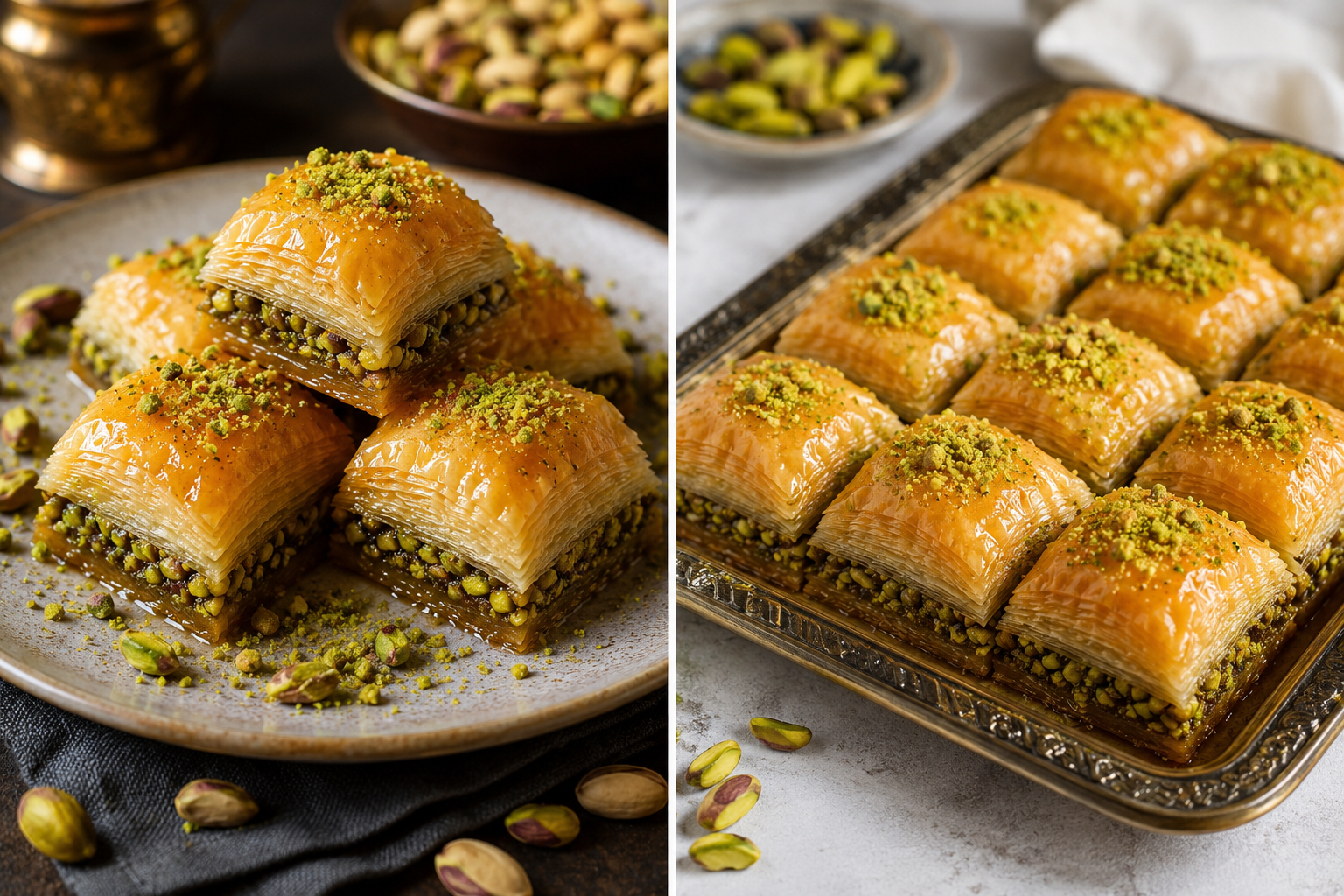
Baklava
The good news? With the right guidance, making this classic dessert at home becomes not only achievable but deeply satisfying. This guide breaks everything down—from selecting ingredients to mastering the baking process—so you can confidently create a bakery-quality result in your own kitchen.
Whether you’re a beginner or looking to refine your technique, this comprehensive article provides step-by-step instructions, expert insights, and practical tips that go beyond standard recipes.
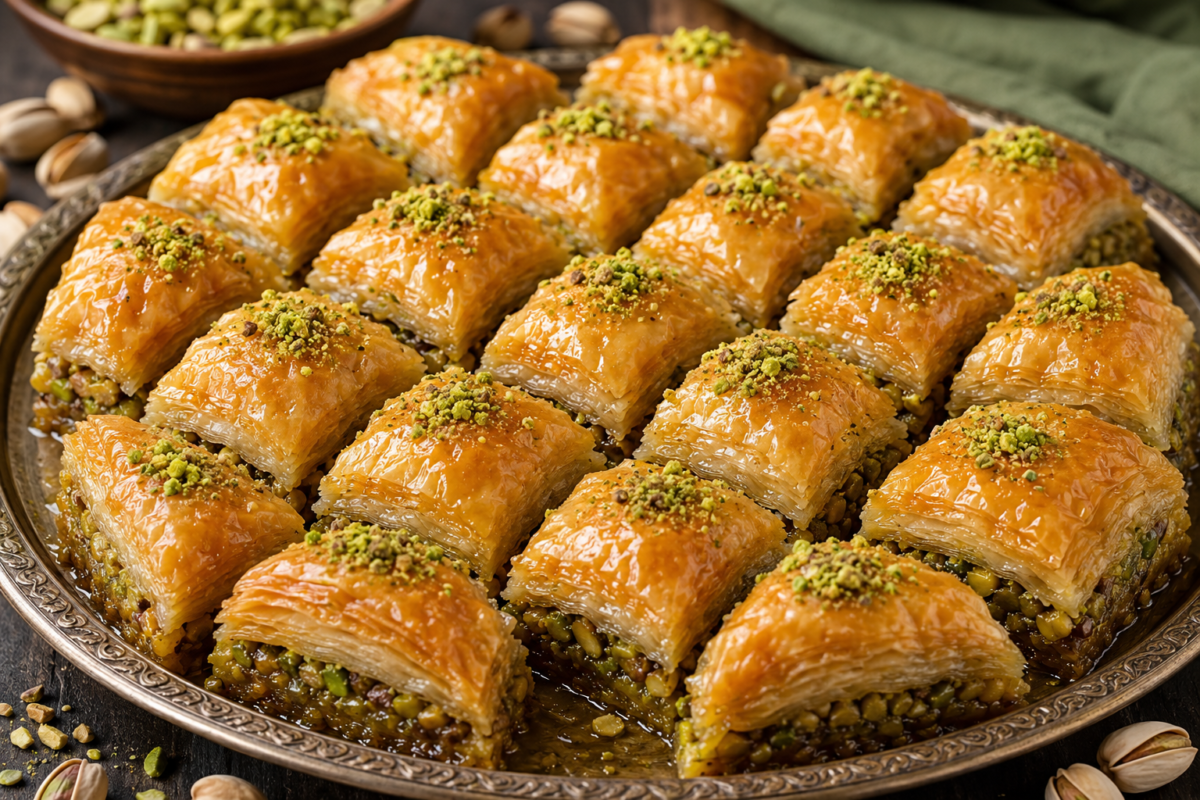
Table of Contents
- What Is This Traditional Dessert?
- Ingredients Breakdown
- Step-by-Step Recipe
- Expert Tips for Perfect Results
- Common Mistakes to Avoid
- Variations and Customizations
- Serving Suggestions
- Storage and Reheating
- Nutrition Facts
- FAQ
What Is This Traditional Dessert?
This layered pastry dessert originates from the Middle East and Mediterranean regions. It consists of ultra-thin sheets of dough (phyllo), finely chopped nuts, butter, and a sweet syrup infused with honey or sugar.
Key Characteristics
- Ultra-thin crispy layers
- Sweet, aromatic syrup
- Nutty and buttery flavor
- Golden, glossy finish
Why It’s So Popular
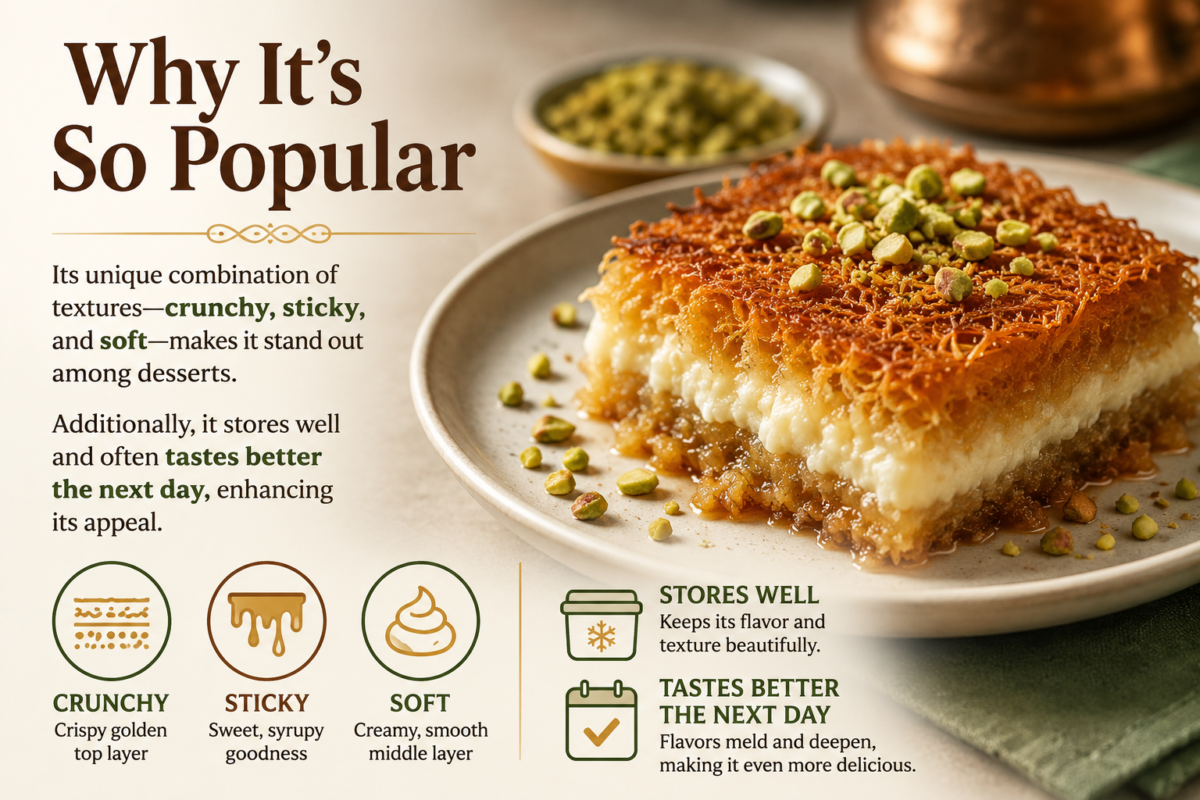
Its unique combination of textures—crunchy, sticky, and soft—makes it stand out among desserts. Additionally, it stores well and often tastes better the next day, enhancing its appeal.
 Ingredients Breakdown
Main Ingredients
- Phyllo dough (16 oz)
- Unsalted butter (1 cup, melted)
- Chopped walnuts or pistachios (2 cups)
- Sugar (1 cup)
- Water (1 cup)
- Honey (1/2 cup)
- Lemon juice (1 tbsp)
- Cinnamon (optional)
Ingredient Tips
- Use fresh nuts for better flavor
- Keep phyllo covered to prevent drying
- Clarified butter improves crispiness
Step-by-Step Recipe
Preparation Time
- Prep Time: 30 minutes
- Cook Time: 45 minutes
- Total Time: 1 hour 15 minutes
- Servings: 12
Step 1: Prepare the Nut Filling
Finely chop the nuts and mix with a small amount of cinnamon for added aroma.
Step 2: Prepare the Syrup
Combine sugar, water, and lemon juice in a saucepan. Simmer for 10 minutes, then add honey. Let it cool completely.
Step 3: Layer the Phyllo
- Brush baking dish with butter
- Layer 8 sheets of phyllo, brushing each with butter
- Add a layer of nuts
- Repeat layers
- Finish with 8–10 top layers
Step 4: Cut Before Baking
Cut into diamond or square shapes before placing in the oven.
Step 5: Bake
Bake at 180°C (350°F) for 40–45 minutes until golden brown.
Step 6: Add Syrup
Pour cooled syrup over hot pastry immediately after baking.
Expert Tips for Perfect Results
- Always butter every phyllo layer
- Use a sharp knife for clean cuts
- Let syrup and pastry be opposite temperatures
- Avoid overfilling with nuts
Common Mistakes to Avoid
- Dry phyllo sheets → leads to cracking
- Too much syrup → soggy texture
- Underbaking → lack of crispiness
- Skipping pre-cutting → uneven pieces
Variations and Customizations
Nut Variations
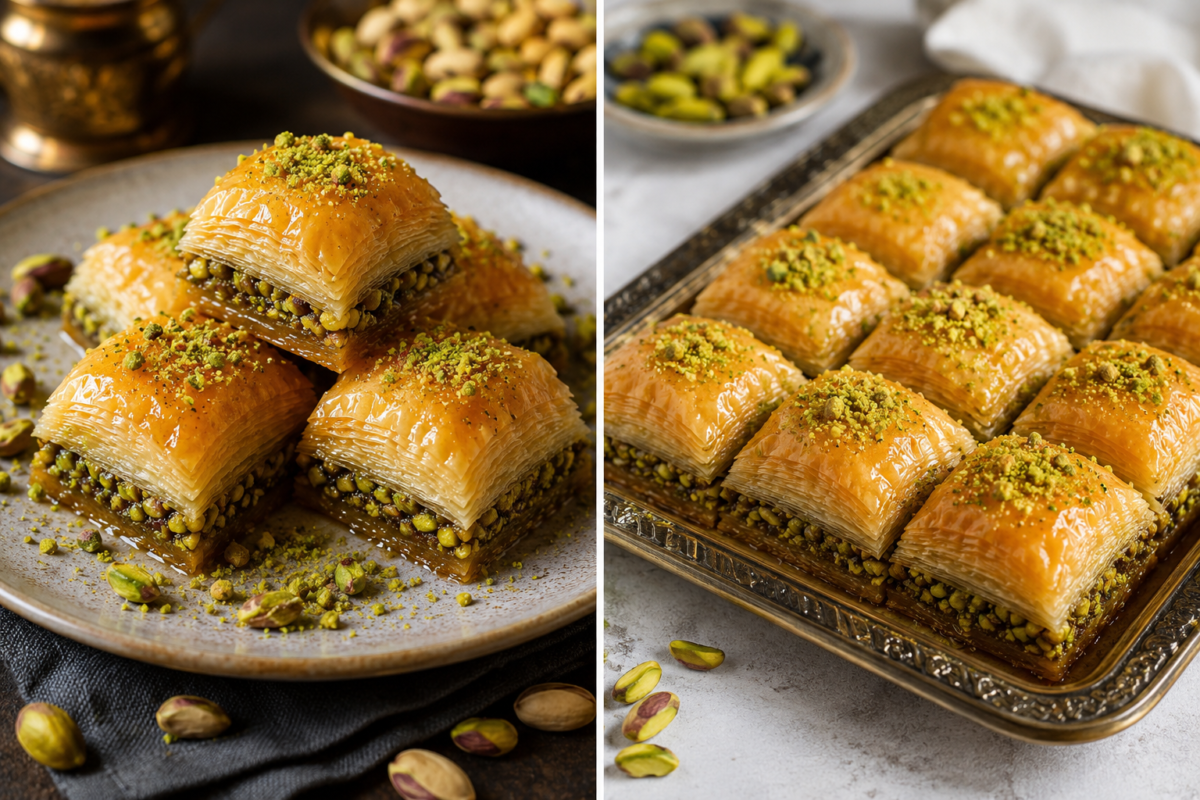
- Pistachio for vibrant flavor
- Almond for lighter texture
- Mixed nuts for complexity
Healthy Version
- Reduce sugar syrup
- Use less butter
- Add natural sweeteners
Vegan Option
- Replace butter with plant-based alternatives
- Use maple syrup instead of honey
Serving Suggestions
- Serve with Turkish coffee
- Pair with tea
- Add a scoop of vanilla ice cream
Storage and Reheating
Storage
- Room temperature: 3–5 days
- Refrigerated: up to 2 weeks
Reheating
- Use oven at low temperature
- Avoid microwave to preserve crispiness
Nutrition Facts (Per Serving)
- Calories: 300–350
- Fat: 18g
- Carbohydrates: 35g
- Sugar: 20g
- Protein: 4g
FAQ
Can I make it ahead of time?
Yes, it often tastes better the next day as flavors develop.
Why is my pastry soggy?
Too much syrup or insufficient baking time.
Can I freeze it?
Yes, freeze before or after baking for up to 3 months.
What nuts work best?
Walnuts and pistachios are the most traditional.
Do I need to thaw phyllo dough?
Yes, thaw overnight in the refrigerator.
Conclusion
Mastering baklava at home is a rewarding culinary achievement. With careful layering, balanced syrup, and attention to detail, you can recreate this iconic dessert with professional-level quality.
Start with the basic recipe, refine your technique, and explore variations to suit your taste. Once mastered, this dessert becomes a reliable showstopper for any occasion.
References