

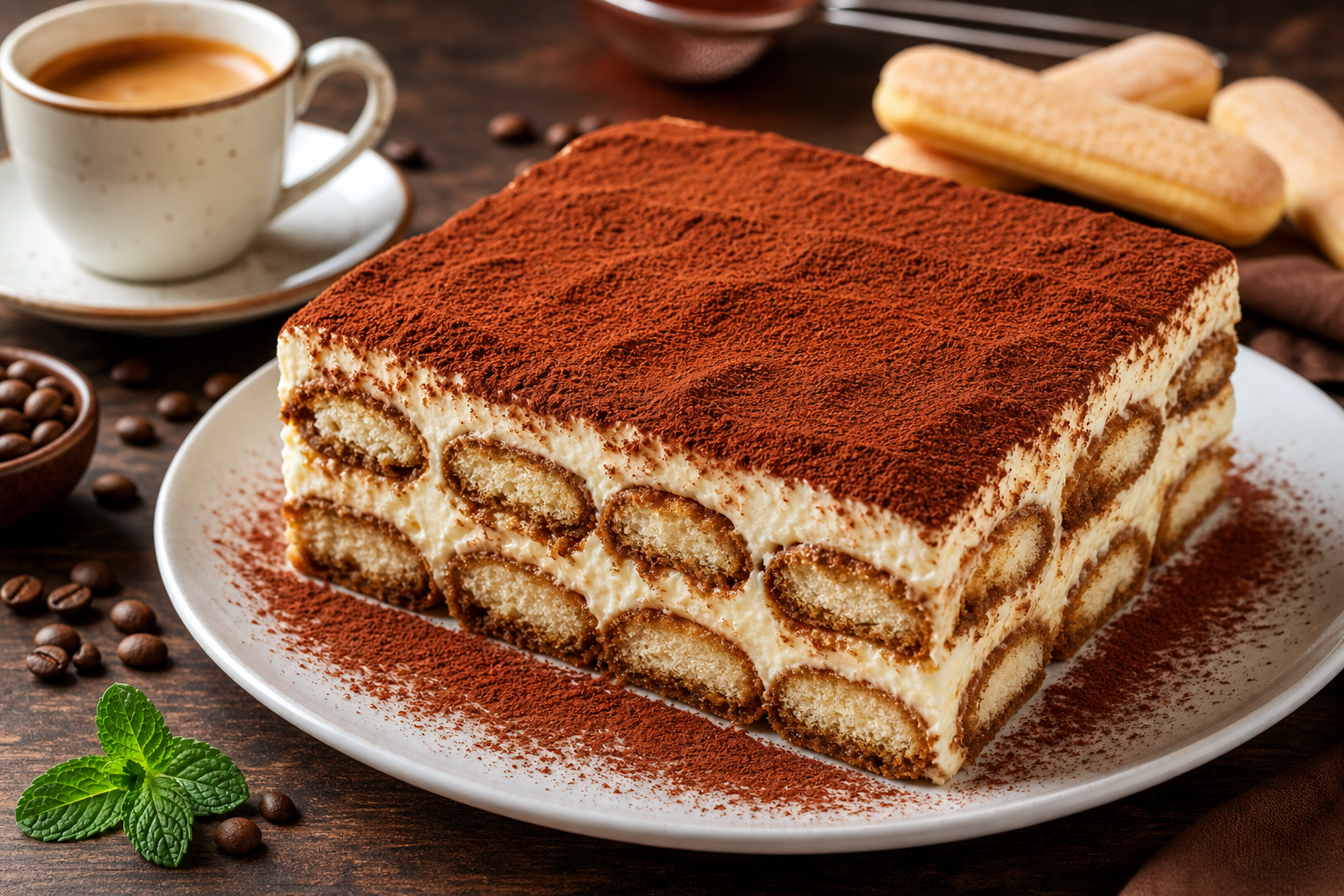
Tiramisu: The Ultimate Italian Dessert Guide
Tiramisu is one of the most iconic Italian desserts in the world, celebrated for its creamy layers, rich coffee flavor, and delicate balance of sweetness and bitterness. This luxurious dessert combines simple ingredients such as mascarpone, espresso, ladyfingers, cocoa powder, and eggs to create a dessert that feels both elegant and comforting. In this comprehensive guide, you will learn everything about Tiramisu, from its origins and cultural significance to step-by-step preparation techniques, variations, and professional tips for achieving perfect results at home.
Whether you are a beginner or an experienced home chef, mastering Tiramisu requires understanding both technique and ingredient quality. This article will break down each component in detail, ensuring that you can recreate this Italian masterpiece with confidence and precision.
Tiramisu Origin and History
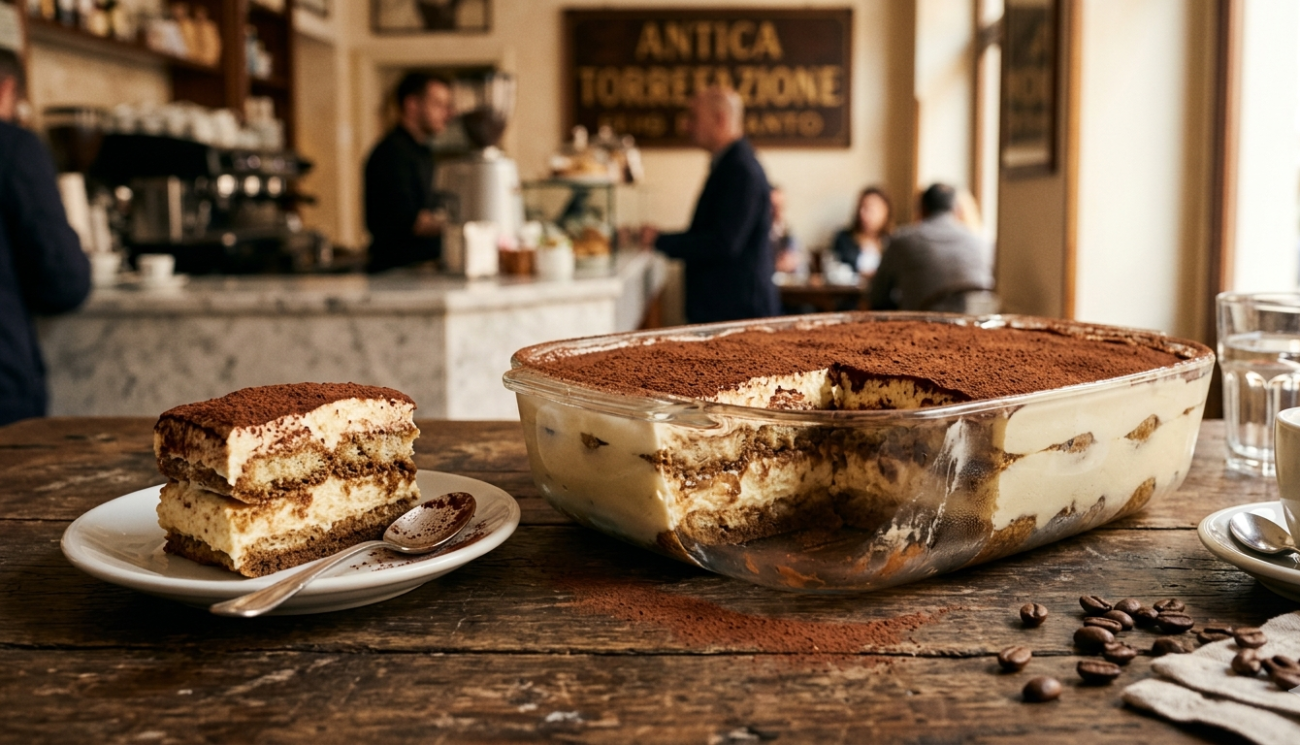
The history of Tiramisu is deeply rooted in Italian culinary tradition, particularly in the Veneto region. While its exact origins are debated, most food historians agree that the dessert gained popularity in the late 20th century. Some sources trace it back to Treviso, where it was originally served in local restaurants as a revitalizing dessert due to its coffee content and energy-boosting properties. Over time, Tiramisu evolved from a regional specialty into a global culinary phenomenon.
The name itself translates to “pick me up” or “lift me up,” reflecting its energizing combination of espresso and sugar. According to historical culinary references, desserts similar to Tiramisu were enjoyed in Italy as early as the 17th century, although the modern version we know today was standardized much later.
For further historical context, you can explore more about its background on Wikipedia’s tiramisu page.
As global interest in Italian cuisine expanded, Tiramisu became a symbol of refined yet accessible dessert culture, appearing in restaurants, bakeries, and home kitchens worldwide.
Essential Ingredients for Classic Preparation
The foundation of this dessert relies on a small set of high-quality ingredients. Each component plays a crucial role in achieving the signature texture and flavor profile. The balance between creamy mascarpone and bold espresso is what defines its identity.
- Fresh mascarpone cheese for creamy texture
- Strong espresso coffee for depth and bitterness
- Ladyfinger biscuits (savoiardi)
- Egg yolks and sugar for custard base
- Unsweetened cocoa powder for finishing
- Optional: Marsala wine or coffee liqueur
High-quality ingredients are essential because even small variations can significantly affect the final result. Mascarpone should be fresh and smooth, while the coffee must be strong enough to balance the sweetness of the cream layer.
Using the right ingredients ensures the authentic flavor profile associated with traditional preparation methods of Tiramisu.
Step-by-Step Preparation Method
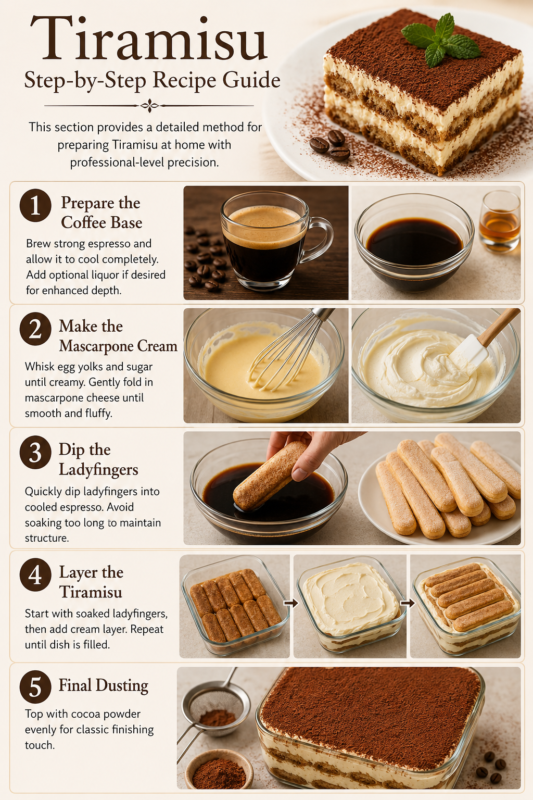
Preparing this dessert requires patience and attention to detail. The process is not complex, but precision is essential to achieve the perfect layered structure and texture.
- Brew strong espresso and allow it to cool completely.
- Whisk egg yolks with sugar until pale and creamy.
- Fold mascarpone cheese gently into the mixture.
- Dip ladyfingers quickly into coffee without soaking them.
- Layer biscuits and cream alternately in a dish.
- Repeat layers until ingredients are used.
- Dust with cocoa powder and refrigerate for at least 4–6 hours.
The layering process is crucial for structure and taste. Each layer should remain distinct while blending harmoniously after chilling. Over-soaking the biscuits is one of the most common mistakes, leading to a soggy texture instead of a balanced dessert.
Variations of Tiramisu Around the World
Over time, many creative adaptations have emerged, reflecting local tastes and ingredient availability. While the classic version remains the most popular, variations offer exciting alternatives.
- Fruit-based versions using strawberries or mango
- Chocolate Tiramisu with added cocoa layers
- Alcohol-free versions for family-friendly servings
- Matcha Tiramisu inspired by Japanese flavors
Each variation maintains the core structure while introducing new flavor dimensions. For example, fruit-based versions replace espresso intensity with refreshing acidity, creating a lighter dessert profile.
Nutritional Insights and Considerations
Although indulgent, this dessert contains ingredients that provide energy and fats essential for a balanced diet when consumed in moderation. Mascarpone contributes richness, while eggs provide protein and structure. However, due to sugar and cream content, portion control is recommended.
For individuals monitoring calorie intake, smaller servings or ingredient substitutions such as reduced sugar or light cream alternatives can be considered.
Serving and Presentation Techniques
Presentation plays a significant role in elevating the overall dessert experience. Proper plating enhances both visual appeal and perceived flavor. A well-prepared Tiramisu should have clean layers and a smooth cocoa finish.
Common serving styles include individual glasses, rectangular trays, or layered cake-style presentations. Dusting cocoa powder just before serving ensures freshness and visual contrast.
Pairing this dessert with espresso or dessert wine enhances the overall dining experience, making it suitable for both casual and formal occasions.
Storage and Shelf Life Guidelines
Proper storage is essential for maintaining texture and safety. The dessert should always be refrigerated and covered to prevent absorption of external odors. Ideally, it should be consumed within 2–3 days for optimal freshness.
Freezing is possible but may slightly alter the creamy consistency. If frozen, gradual thawing in the refrigerator is recommended to preserve structure.
Frequently Asked Questions (FAQ)
What makes Tiramisu unique compared to other desserts?
Its combination of coffee-soaked biscuits and creamy mascarpone creates a layered texture that is both light and rich at the same time.
Can Tiramisu be made without alcohol?
Yes, alcohol is optional and can be replaced with coffee syrup or omitted entirely without affecting the core structure.
How long should Tiramisu rest before serving?
It should rest for at least 4–6 hours, but overnight chilling produces the best flavor integration and texture stability.
Is it safe to use raw eggs?
Traditional recipes use raw eggs, but pasteurized eggs or egg-free alternatives can be used for safety concerns.
Conclusion
In conclusion, Tiramisu remains one of the most beloved desserts in global cuisine due to its simplicity, elegance, and rich flavor profile. From its historical roots in Italy to its modern global variations, it continues to evolve while preserving its classic identity.
By understanding ingredient selection, preparation techniques, and proper layering methods, anyone can master this dessert at home. Whether served at family gatherings or fine dining events, it consistently delivers a memorable culinary experience.
Internal resource for more recipes
Mastering this dessert is not just about following a recipe—it is about understanding balance, texture, and tradition.
https://en.wikipedia.org/wiki/Tiramisu